When Your Dog Won’t Eat: Gentle First Steps Every Pet Parent Should Know
When Your Dog Won’t Eat: Gentle First Steps Every Pet Parent Should Know
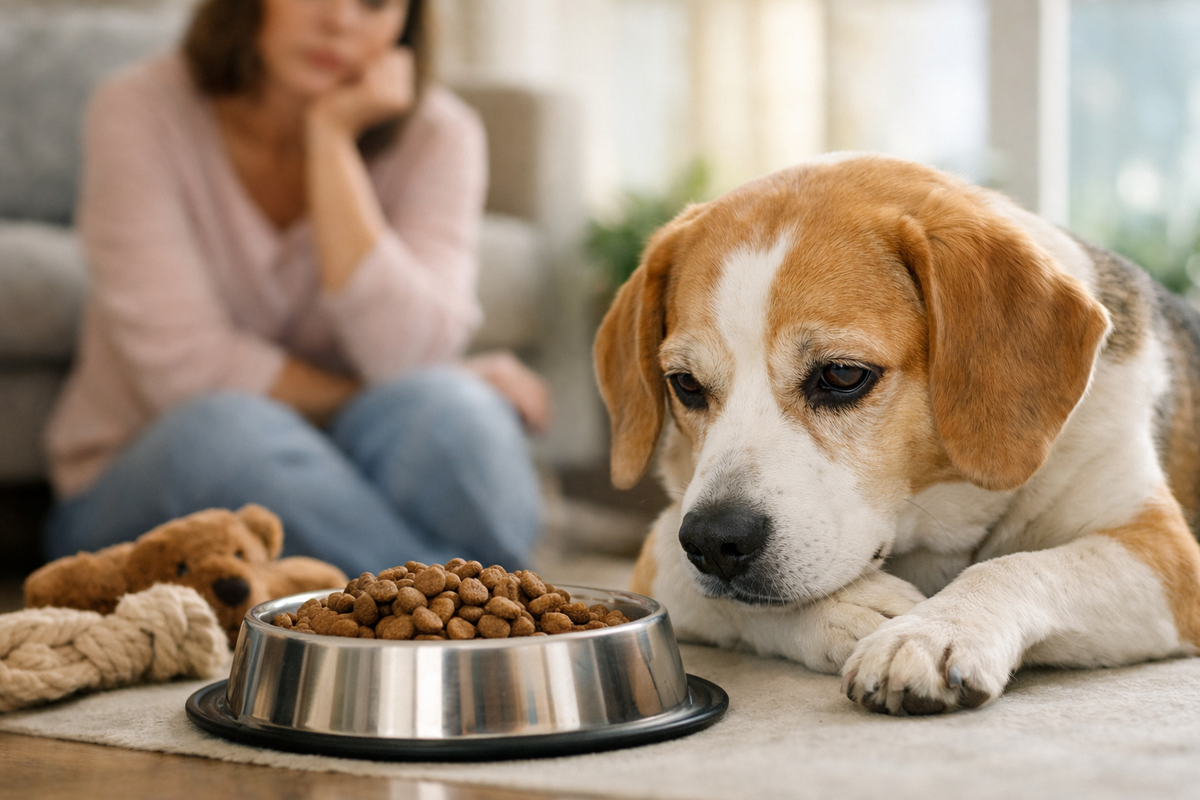
There is a quiet worry that settles in when a dog turns away from their food bowl.
For many pet parents, especially those who know their dog’s usual enthusiasm at mealtime, this change can feel sudden and unsettling. Appetite is often one of the first visible signs of wellbeing—and when it shifts, it deserves gentle attention.
Before panic sets in, it helps to pause, observe, and take a few thoughtful first steps.
Not every missed meal signals illness. But every change tells a story.
Understanding the Change
A healthy dog may occasionally skip a meal without cause for alarm. Much like us, dogs can have off days.
However, appetite loss becomes more meaningful when it is:
- Sudden and persistent
- Accompanied by lethargy or vomiting
- Linked with environmental or routine changes
In a fast-paced environment like Dubai, where pets may experience travel, heat, boarding, or grooming transitions, even subtle stressors can affect eating habits.
Gentle First Steps at Home
Before rushing to a veterinary clinic in Dubai, there are a few calm, supportive steps you can take at home.
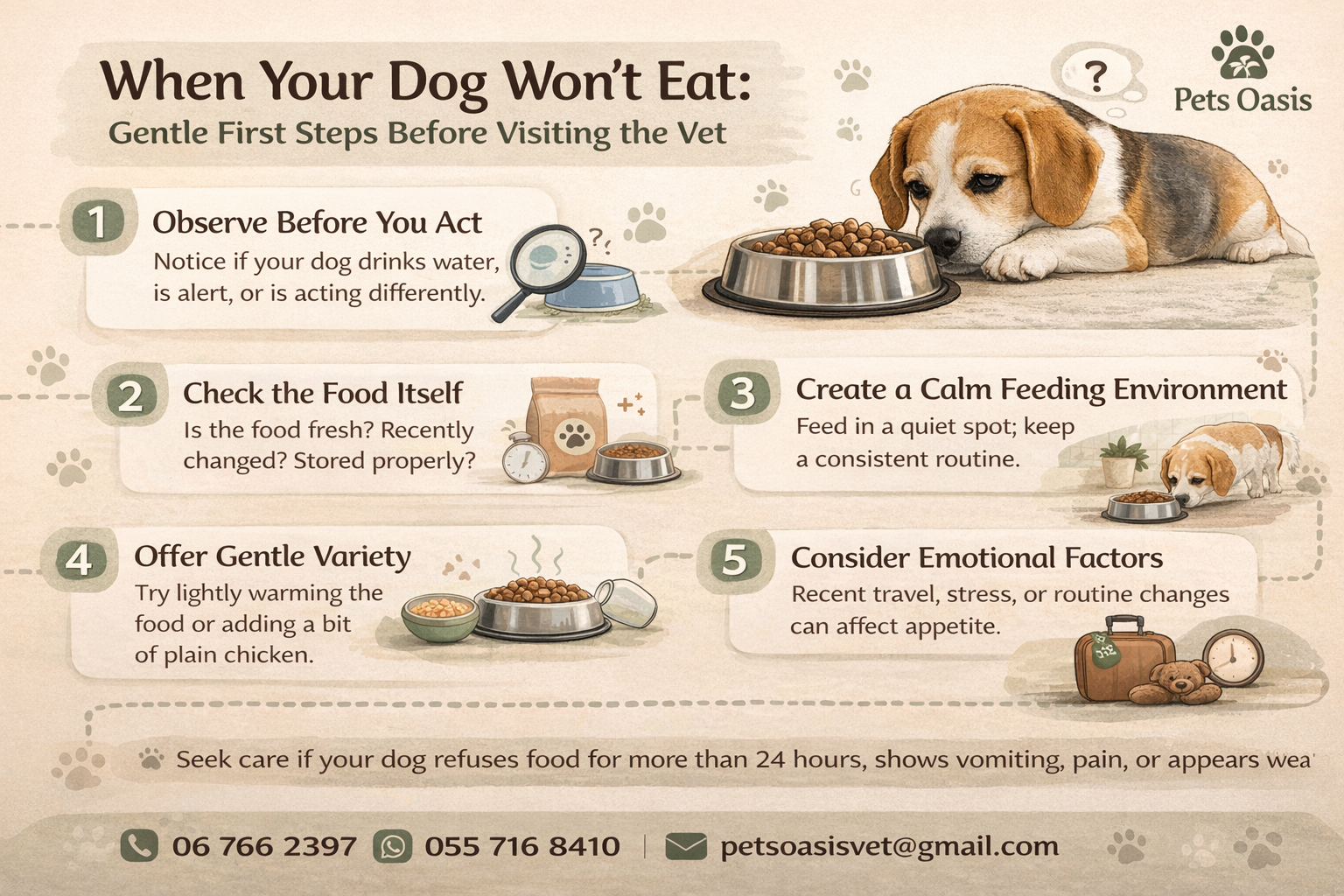
1. Observe Before You Act
Take a moment to notice:
- Is your dog drinking water normally?
- Are they alert or unusually quiet?
- Have there been recent changes—new food, travel, grooming, or boarding?
Observation provides your veterinarian with valuable context if a visit becomes necessary.
2. Check the Food Itself
Sometimes the answer is surprisingly simple.
- Has the food gone stale?
- Has there been a recent change in brand or formulation?
- Is the food stored properly in Dubai’s warm climate?
Dogs can be sensitive to freshness, especially in humid conditions.
3. Create a Calm Feeding Environment
Dogs are deeply responsive to their surroundings.
Try:
- Feeding in a quiet, low-traffic space
- Maintaining consistent feeding times
- Reducing distractions during meals
A calm environment often restores a sense of routine and safety.
4. Offer Gentle Variety (With Care)
If your dog seems hesitant, you may try:
- Slightly warming their food
- Adding a small amount of plain boiled chicken or broth
Avoid frequent switching or overly rich additions, as this can create long-term feeding challenges.
5. Consider Emotional Factors
Dogs are intuitive companions. Changes in your schedule, household energy, or environment can affect them more than we realise.
A new home, travel, or even a busy week can temporarily reduce appetite.
When to Seek Veterinary Care
While many cases resolve with simple adjustments, some situations require prompt attention from a veterinarian in Dubai.
You should seek professional care if:
- Your dog refuses food for more than 24 hours (puppies: sooner)
- There is vomiting, diarrhoea, or signs of pain
- Your dog appears weak, dehydrated, or withdrawn
- There is sudden weight loss
Loss of appetite can be an early sign of underlying medical conditions that require timely diagnosis.
In my years working with pet families across the UAE, I have seen how quickly worry can escalate when something feels “off.”
But I have also seen the value of calm, attentive observation.
The goal is not to delay care—but to approach it with clarity.
At Pets Oasis, whether it’s a simple dietary adjustment or a deeper medical concern, our approach is always the same: gentle, thorough, and centred on your pet’s wellbeing.
When your dog won’t eat, it’s not just about food.
It’s about listening—to behaviour, to routine, to subtle shifts that speak before symptoms become obvious.
Trust your instincts. Stay observant. And when needed, seek guidance early.
Because in pet care, reassurance often begins with understanding.
If your dog’s appetite has changed and you’d like professional guidance, our veterinary team is here to support you with calm, expert care.
📞 Call: 06 766 2397
💬 WhatsApp: 055 716 8410
📧 Email: petsoasisvet@gmail.com
FAQs
Why is my dog not eating but acting normal?
Dogs may skip meals due to mild stress, routine changes, or temporary digestive upset. If it continues beyond 24 hours, consult a veterinarian.
How long can a dog safely go without eating?
Most healthy adult dogs can go 24–48 hours, but this is not ideal. Puppies should be seen much sooner.
Should I change my dog’s food if they stop eating?
Not immediately. Sudden changes can worsen the issue. Start with small adjustments and monitor closely.
Can Dubai’s climate affect my dog’s appetite?
Yes. Heat and humidity can reduce appetite, especially if hydration or storage conditions are not optimal.
When should I visit a veterinary clinic ?
If appetite loss persists beyond 24 hours or is accompanied by other symptoms, seek veterinary care promptly.