Why Some Pet Parents Hesitate to Vaccinate—and How We Can Rebuild Trust
Vaccine hesitancy is rising among pet owners. Understanding concerns is the first step toward protecting pets and public health.
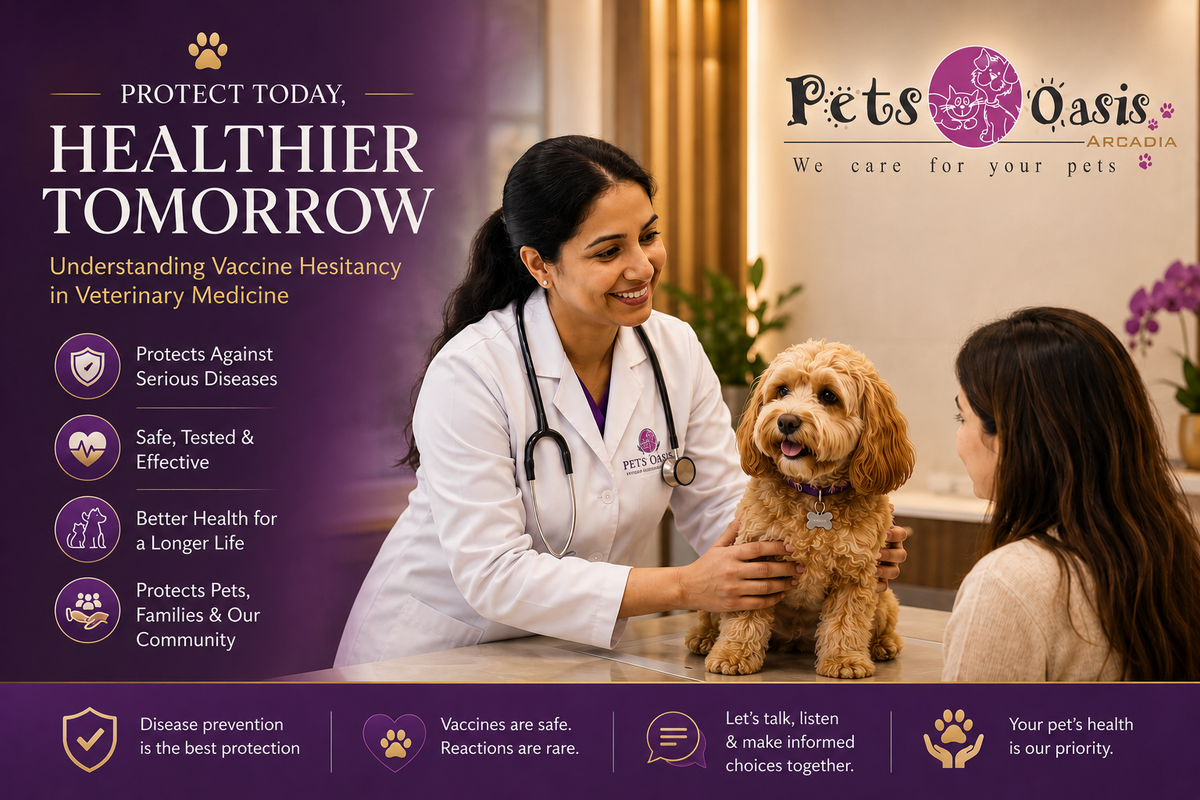
As veterinarians, we witness the profound impact vaccines have on animal health every day.
Diseases that were once devastating parvovirus, distemper, rabies, and leptospirosis are now far less common because vaccination has become a routine part of preventive care.
And yet, in recent years, more pet parents have begun to ask an important question:
“Are all these vaccines really necessary?”
It is a thoughtful question. And one that deserves a thoughtful answer.
At Pets Oasis, we believe the best decisions are made through open, respectful conversations grounded in science, compassion, and trust.
What Is Vaccine Hesitancy?
Vaccine hesitancy refers to delaying or declining vaccines despite having access to veterinary care.
It is not simply a matter of “for” or “against.”
Some pet parents accept all vaccines confidently. Others have questions about specific vaccines. A small minority may refuse vaccination entirely.
Most fall somewhere in between.
These clients are not being difficult—they are trying to make the best possible decisions for the animals they love.
Why Pet Parents Hesitate
Research consistently shows two main reasons for vaccine hesitancy.
1. Underestimating Disease Risk
Many owners believe their pet is unlikely to encounter infectious disease.
- “My dog stays indoors.”
- “We only walk in the neighborhood.”
- “My cat never goes outside.”
Unfortunately, infectious diseases do not always respect those assumptions.
Parvovirus can survive in the environment for months. Leptospirosis can spread through contaminated water. Rabies remains a public health concern in many parts of the world.
Even pets with seemingly low-risk lifestyles may still be exposed.
2. Overestimating Vaccine Risks
Others worry that vaccines may cause serious side effects.
Concerns often stem from online misinformation, anecdotal stories, or outdated data.
While no medical intervention is entirely risk-free, veterinary vaccines have an excellent safety record.
How Common Is Vaccine Hesitancy?
Vaccine concerns are more common than many veterinarians realize.
Studies suggest:
- 22% of dog owners believe vaccine risks outweigh the benefits.
- 30% feel some vaccines are unnecessary.
- 37% believe vaccines may affect cognitive health.
These concerns often mirror attitudes seen in human healthcare.
Why Vaccination Still Matters
Vaccines remain one of the most effective tools in preventive veterinary medicine.
Parvovirus and Distemper
These life threatening diseases still occur regularly, particularly in shelters and communities with lower vaccination rates.
Rabies
Rabies is nearly always fatal and remains a major global public health threat.
Leptospirosis
Leptospirosis is potentially fatal, affects the kidneys and liver, and can be transmitted to humans.
Widespread use of modern leptospirosis vaccines has significantly reduced severe cases requiring intensive treatment.
Are Vaccines Safe?
Yes. Serious adverse reactions are rare.
Current data shows:
- Acute vaccine reactions occur in fewer than 1% of dogs.
- Feline injection-site sarcomas are estimated at approximately 1 in 16,000 to 1 in 50,000 cats.
- Most side effects are mild and resolve quickly.
All licensed veterinary vaccines undergo rigorous testing for safety, efficacy, and quality.
The Financial Value of Prevention
Vaccination is not only safer than treating disease—it is dramatically more cost-effective.
Consider leptospirosis:
- Vaccine series: approximately $100
- Treatment without dialysis: around $4,000
- Treatment with dialysis: up to $20,000
Prevention protects both your pet’s health and your family’s finances.
How Veterinarians Build Trust
At Pets Oasis Veterinary Hospital and Pet Resort, we understand that questions about vaccines come from a place of love.
Our role is not to pressure pet parents. It is to provide clear information and personalized recommendations.
Confident Recommendations
Instead of asking, “Which vaccines would you like today?”
A more effective approach is:
“Fluff is due for these vaccines today. What questions do you have?”
This communicates confidence while inviting discussion.
Listening Without Judgment
Open, empathetic conversations often reveal the real concerns behind hesitation.
Personalizing Risk
A dog who visits parks, boarding facilities, or hiking trails has different exposure risks than a pet who rarely leaves home.
Sharing Our Own Choices
Pet parents are often reassured when veterinarians explain that they vaccinate their own pets.
Recognizing Misinformation
In today’s digital world, pet owners are exposed to an overwhelming amount of advice.
Common warning signs include:
- Emotionally charged social media posts
- Outdated studies
- Recommendations from non medical sources
The most reliable guidance comes from qualified veterinary professionals who understand both the science and the individual pet.
Which Pet Parents Are Most Open to Discussion?
The greatest opportunity lies with those who:
- Attend routine wellness visits
- Accept some vaccines but not others
- Have moderate concerns rather than fixed opposition
With respectful dialogue, these conversations often lead to informed decisions.
A Shared Goal: Keeping Pets Healthy
Vaccination decisions are deeply personal because our pets are family.
As veterinarians, we never take your trust for granted.
Our goal is simple: to help you make informed choices that protect your companion from preventable disease while respecting your concerns.
When trust and science work together, pets live longer, healthier lives.
Frequently Asked Questions
Are pet vaccines really necessary?
Yes. Vaccines protect against serious and potentially fatal diseases such as parvovirus, rabies, distemper, and leptospirosis.
Can vaccines cause side effects?
Mild side effects such as temporary lethargy or soreness can occur, but serious reactions are very rare.
Does my indoor pet still need vaccines?
In many cases, yes. Even indoor pets can be exposed through people, other animals, and environmental contamination.
How do veterinarians decide which vaccines my pet needs?
Recommendations are based on species, age, health status, lifestyle, travel plans, and local disease prevalence.
Where can I get pet vaccinations in Dubai or the UAE?
A trusted veterinary hospital such as Pets Oasis can provide tailored vaccination plans for your pet.