How to Ease Your Pet’s Separation Anxiety Before a Boarding Stay
Thoughtful ways to help your pet feel calm, secure, and cared for during a boarding stay in Dubai.
For many pet parents, boarding brings two emotions at once: relief that their pet will be cared for, and worry about how they will cope in their absence.
That worry is understandable.
Pets thrive on familiarity. They know your scent, your routines, your voice, and the quiet rituals that make them feel safe. So when boarding becomes necessary, whether for travel, work, or family commitments, it is natural to wonder how your beloved companion will adjust. For some pets, especially those deeply bonded to their family, that adjustment can come with signs of separation anxiety.
The good news is that with thoughtful preparation, the right environment, and gentle support, boarding does not have to feel distressing. It can become a calm, safe, and even positive experience.
As a veterinarian, I often remind pet parents that emotional wellbeing matters just as much as physical care. When we prepare a pet properly for boarding, we help them feel more secure, more settled, and more resilient.
What Separation Anxiety Can Look Like During Boarding
Separation anxiety is not simply “missing you.” It is a stress response that can show up in different ways depending on your pet’s temperament, history, and previous experiences.
Some pets may become unusually vocal. Others may pace, refuse food, hide, pant excessively, or seem restless and unsettled. In some cases, a pet who is normally social may become withdrawn, while another may become unusually clingy with caregivers.
These behaviours do not mean a pet is being difficult. They are signs that the animal is struggling to regulate stress in an unfamiliar setting.
This is why choosing a well-managed pet boarding Dubai facility matters so much. A calm, attentive team can recognise the difference between normal adjustment and genuine emotional distress.
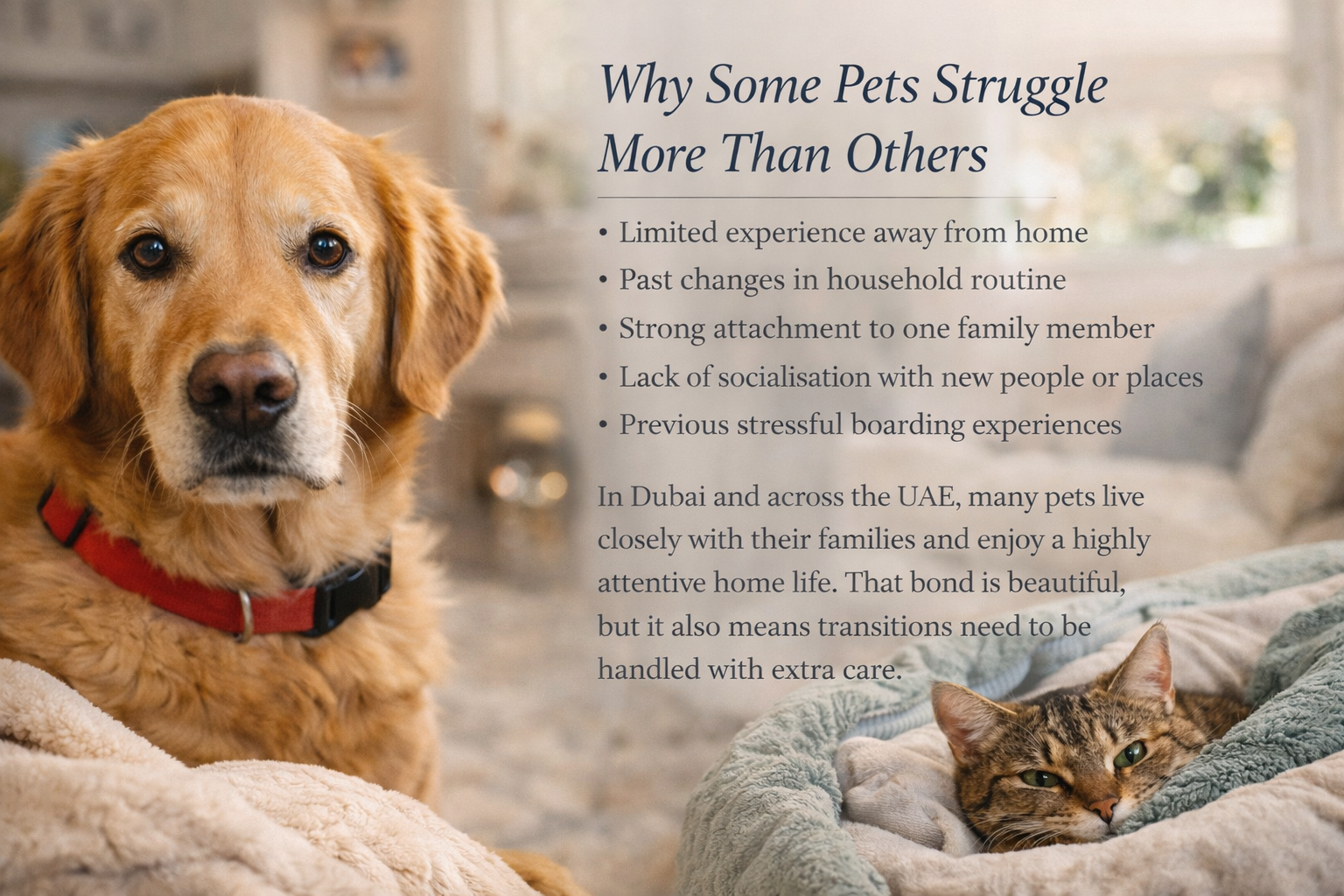
Why Some Pets Struggle More Than Others
Not every pet experiences boarding in the same way.
A confident, well-socialised dog may adapt quickly to a new environment, while a more sensitive pet may need time and structured reassurance. Cats, in particular, often respond strongly to environmental change, especially if they are routine-driven or naturally reserved.
A few common factors can make separation anxiety more likely:
- Limited experience away from home
- Past changes in household routine
- Strong attachment to one family member
- Lack of socialisation with new people or places
- Previous stressful boarding experiences
In Dubai and across the UAE, many pets live closely with their families and enjoy a highly attentive home life. That bond is beautiful, but it also means transitions need to be handled with extra care.
How to Prepare Your Pet Before Boarding
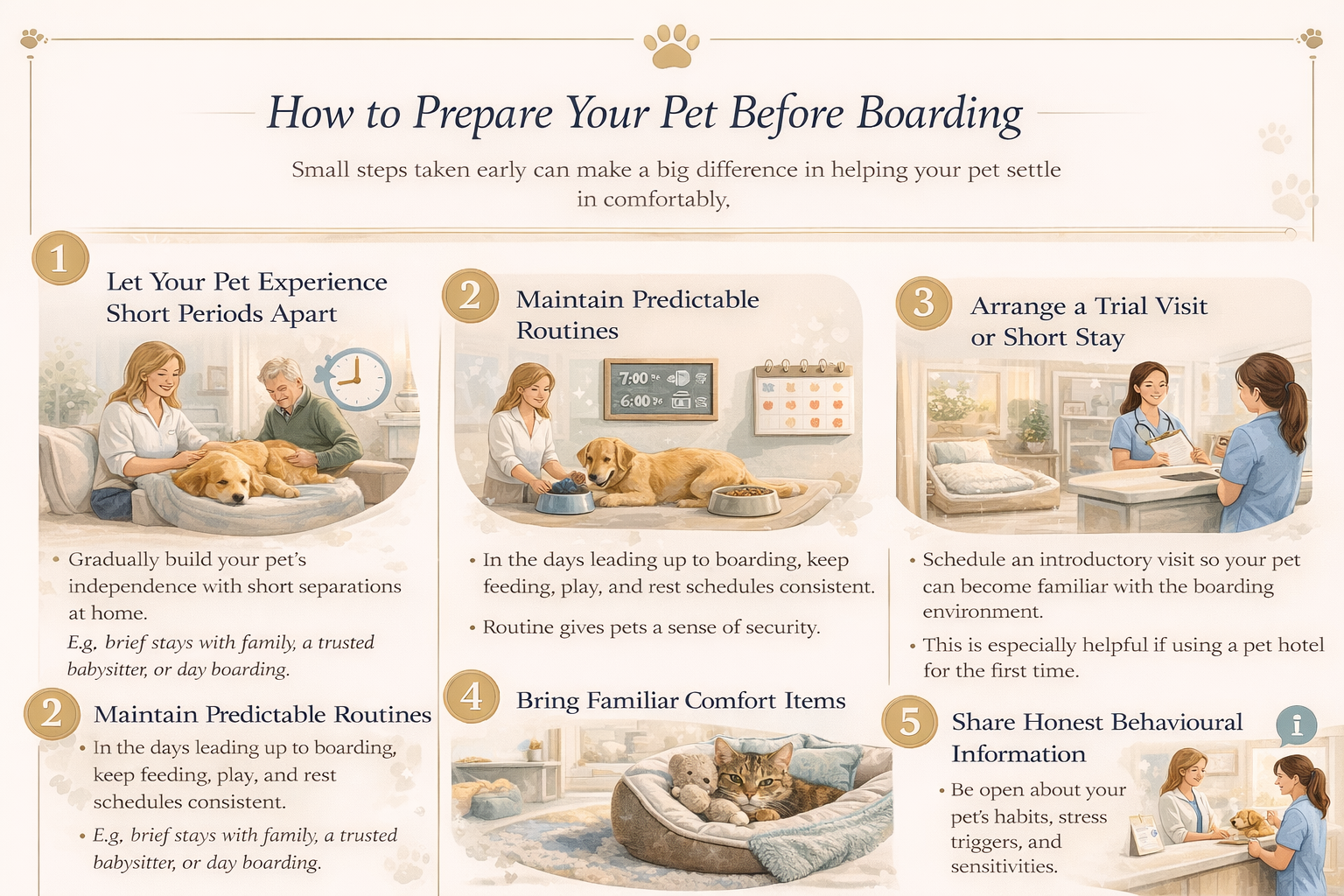
Preparation should begin before the check-in day. Small steps taken early can make a significant difference in how comfortably your pet settles into their stay.
1. Let Your Pet Experience Short Periods Apart
If your pet is rarely left alone, start by building independence gradually. Short separations at home can help them learn that your absence is temporary and safe.
This might mean leaving them with a trusted family member, arranging short daytime stays, or practising brief departures and calm returns. The goal is not to overwhelm them, but to make separation feel familiar rather than alarming.
2. Maintain Predictable Routines
Pets feel safer when life feels predictable. In the days leading up to boarding, try to keep feeding times, walks, play, and rest schedules consistent.
Routine gives pets a sense of control. When something as significant as boarding is approaching, consistency in the home environment helps reduce the emotional impact of change.
3. Arrange a Trial Visit or Short Stay
For many anxious pets, the first boarding experience is hardest simply because everything is new.
A short introductory visit or trial stay can help your pet become familiar with the environment, sounds, smells, and caregivers before a longer booking. This is especially valuable for pets using a pet hotel Dubai service for the first time.
Even a brief, positive introduction can make the full stay feel far less intimidating.
4. Bring Familiar Comfort Items
A favourite blanket, bedding item, or toy carrying the scent of home can be deeply reassuring. Familiar smells often help pets settle more quickly in a new space.
Choose items that are safe, washable, and emotionally meaningful to your pet. Sometimes the smallest comfort object can make the environment feel less foreign.
5. Share Honest Behavioural Information
One of the kindest things a pet parent can do is be transparent.
Tell the boarding team if your pet is shy, noise-sensitive, reactive, attached, slow to warm up, or prone to anxiety during change. Mention feeding preferences, sleep habits, comfort routines, and any signs of stress you have noticed before.
A quality luxury pet resort Dubai or veterinary clinic Dubai team will not judge this information. They will use it to personalise care.
What to Look for in a Boarding Facility for Anxious Pets
Not all boarding environments are equally supportive for emotionally sensitive pets. For pets with separation anxiety, the setting itself plays an important role in how well they adapt.
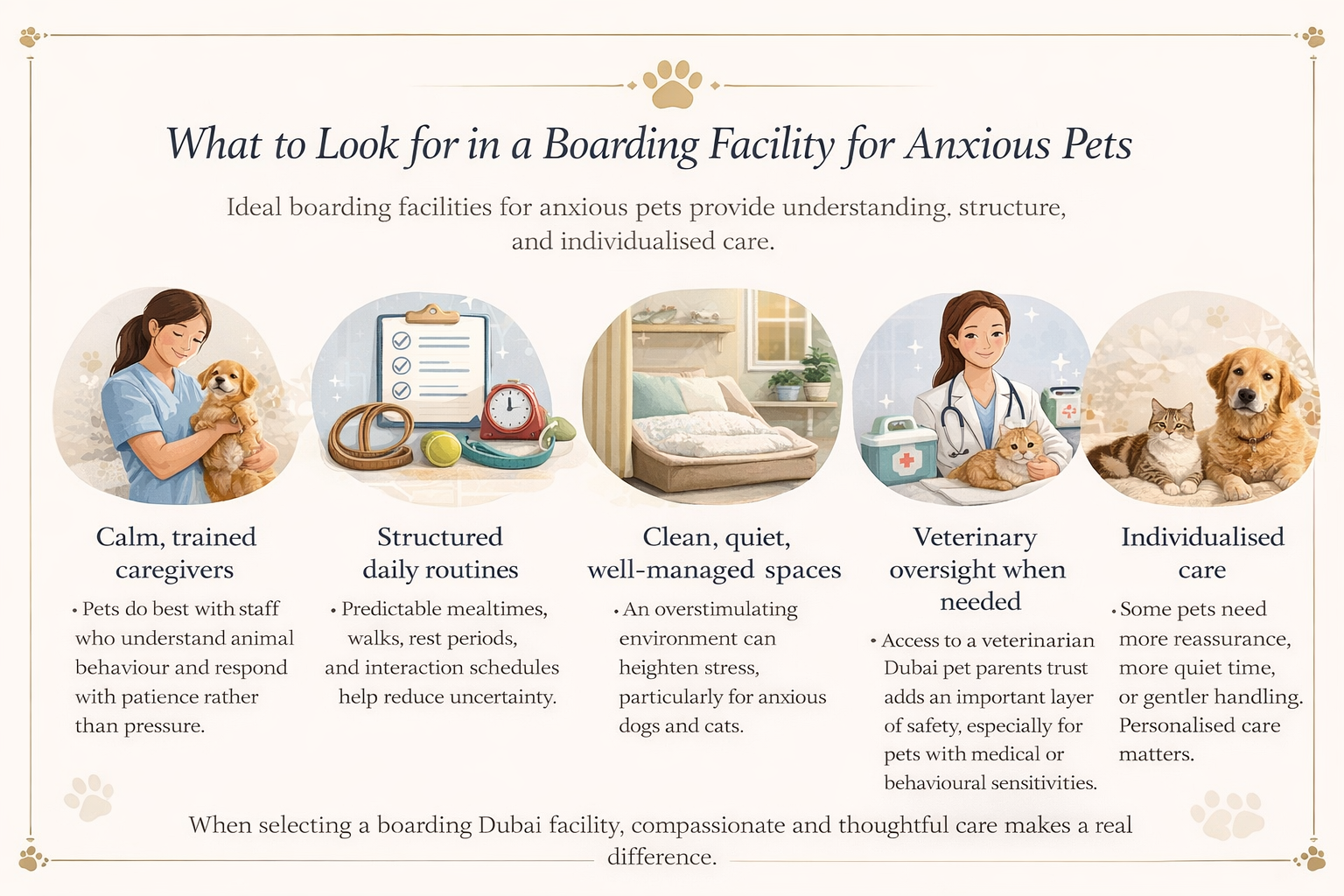
Look for a boarding facility that offers:
Calm, trained caregivers
Pets do best with staff who understand animal behaviour and respond with patience rather than pressure.
Structured daily routines
Predictable mealtimes, walks, rest periods, and interaction schedules help reduce uncertainty.
Clean, quiet, well-managed spaces
An overstimulating environment can heighten stress, particularly for anxious dogs and cats.
Veterinary oversight when needed
Access to a veterinarian Dubai pet parents trust adds an important layer of safety, especially for pets with medical or behavioural sensitivities.
Individualised care
Some pets need more reassurance, more quiet time, or gentler handling. Personalised care matters.
When pet parents search for the best vet Dubai or a trusted boarding experience, they are often looking for more than convenience. They are looking for emotional confidence. They want to know their pet will be understood.
How Pet Parents Should Handle Drop-Off Day
Drop-off can be harder on the human than the pet.
Pets are highly perceptive. They notice our energy, our voice, our body language, and our hesitation. A prolonged, emotional goodbye can unintentionally signal that something is wrong.
Instead, aim for calm confidence.
Keep the goodbye gentle and brief. Speak normally. Offer reassurance without creating tension. Trust the team you have chosen, and allow them to guide your pet into the transition.
Often, pets settle more quickly once the goodbye moment has passed.
When Veterinary Advice Is Important
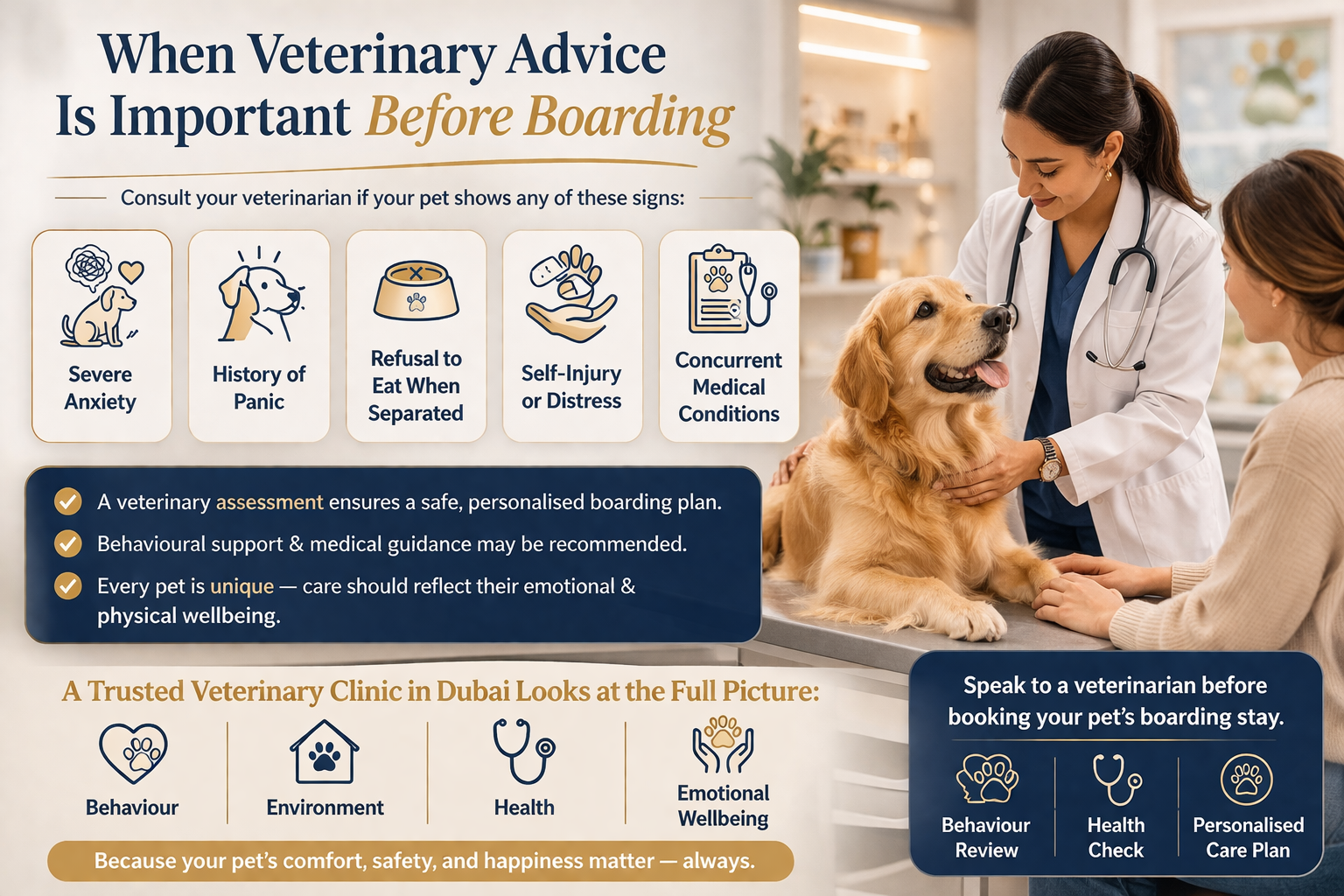
If your pet has severe anxiety, a history of panic, self-injury, refusal to eat during separation, or concurrent medical conditions, speak with your veterinarian before booking a boarding stay.
In some cases, behavioural planning or medical guidance may be appropriate. This should always be assessed professionally and tailored to the individual pet. No boarding plan should ignore a pet’s emotional or medical history.
At a reputable veterinary clinic Dubai pet parents can rely on, the focus should always be on the full picture: behaviour, environment, health, and emotional wellbeing.
Supporting Recovery After Boarding
Some pets return home relaxed and happy. Others may need a little time to decompress.
Once home, keep the environment calm and familiar. Resume normal feeding, walks, and rest routines. Offer reassurance, but also allow space for your pet to settle at their own pace.
A short adjustment period after boarding is not unusual. What matters most is that your pet feels safe returning to their rhythm.
A Final Thought for Pet Parents
Boarding is sometimes necessary, but it does not have to feel like an emotional setback for your pet.
With preparation, compassionate handling, and the right care environment, even sensitive pets can learn that a boarding stay is not something to fear. They can be safe, comforted, and gently supported while you are away.
As pet parents, we often focus on practical arrangements, what to pack, when to drop off, how long we will be gone. But the deeper question is this: will my pet feel understood?
That is the standard we should always hold.
If your pet is anxious about time away from home, choose a team that values emotional care as highly as clinical and physical wellbeing. Because true pet care Dubai families can trust is never only about supervision. It is about compassion, reassurance, and thoughtful attention to the animal behind the booking.
For caring support with boarding, wellness, and personalised pet care in the UAE, Pets Oasis is here to help.
Call: 06 766 2397
WhatsApp: 055 716 8410
Email: petsoasisvet@gmail.com
FAQs
Can pets get separation anxiety during boarding?
Yes. Some pets experience stress when separated from their family and placed in a new environment. This may show up as restlessness, reduced appetite, vocalising, hiding, or clingy behaviour.
How can I help my dog before a boarding stay?
You can help by maintaining routine, practising short separations, arranging a trial stay, and sharing your dog’s habits and sensitivities with the boarding team.
Is boarding stressful for cats?
It can be, especially for cats who are highly routine-oriented or sensitive to environmental changes. Calm spaces, familiar items, and experienced caregivers can help reduce stress.
Should I tell the boarding team my pet is anxious?
Absolutely. Honest communication helps the team create a more supportive care plan and recognise what your pet needs to feel safe.
When should I speak to a veterinarian before boarding?
You should consult a veterinarian if your pet has severe anxiety, medical conditions, a history of panic during separation, or has previously struggled significantly during boarding.
What should I pack for an anxious pet during boarding?
A familiar blanket, bedding, favourite toy, regular food, and clear care instructions can all help your pet feel more secure during their stay.